

Ketamine Treatment for Depression
An evidence-based guide to how ketamine is used for difficult-to-treat depression, who may be evaluated, what treatment involves, possible benefits and risks, and how IV ketamine differs from SPRAVATO®.
Quick Answer
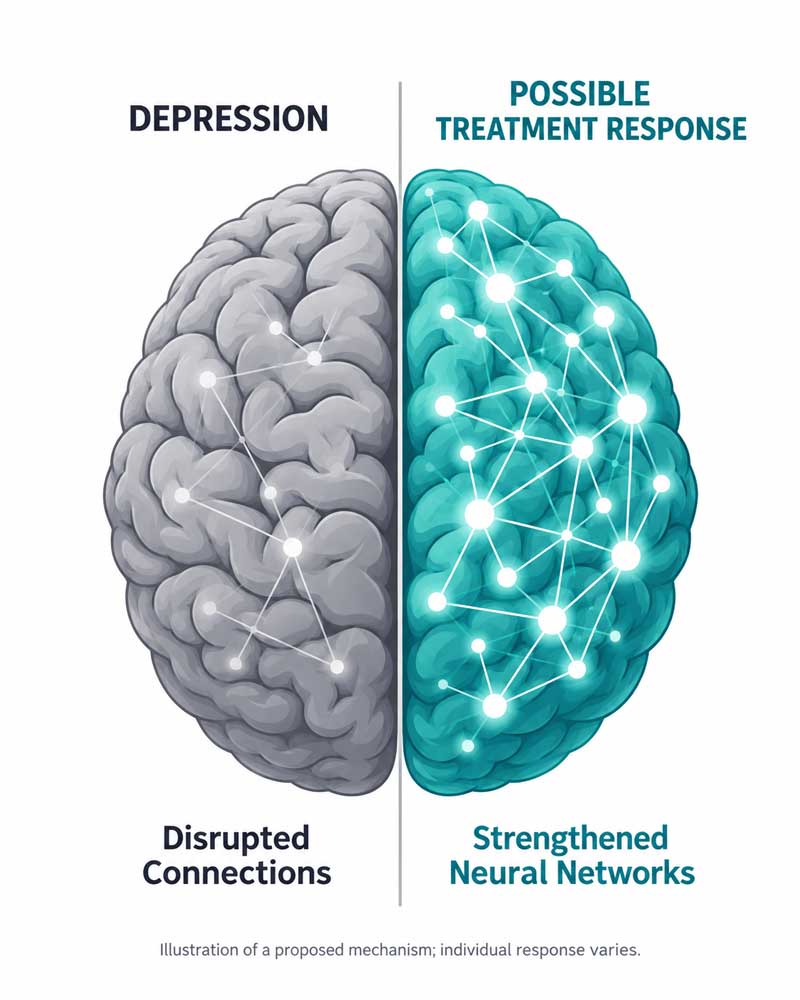
Ketamine is an anesthetic medication that is also used off-label in selected clinical settings for depression, especially treatment-resistant depression. Unlike conventional antidepressants, ketamine acts primarily through the brain’s glutamate system. Some patients improve relatively quickly, but response is not guaranteed, benefits may fade, and screening, monitoring and follow-up care are essential.
What Is Ketamine Treatment for Depression?
Ketamine is a dissociative anesthetic that has been used in medicine for decades. In mental healthcare, clinicians may administer lower, subanesthetic doses to selected patients with depression. Intravenous ketamine is not FDA-approved specifically for depression; this use is considered off-label. Review the current FDA prescribing information for ketamine.
Ketamine has drawn attention because its biological pathway and treatment timeline differ from those of conventional antidepressants. It is most often discussed when depression has not improved adequately after appropriate medication, psychotherapy or other care.
Off-label use does not automatically mean inappropriate use. It means the clinician must rely on current evidence, professional judgment, informed consent and careful monitoring rather than a depression-specific approval for the IV product.
Ketamine Treatment at a Glance
This overview is a starting point for an informed conversation with a qualified clinician. Individual protocols and eligibility requirements vary.
| Question | General information |
|---|---|
| What is it? | A prescription anesthetic used off-label at subanesthetic doses for depression in selected clinical settings. |
| Who is commonly evaluated? | Adults with treatment-resistant depression or severe symptoms after an individualized psychiatric and medical review. |
| How is it given? | Most depression research has examined intravenous administration. Other routes differ in absorption, evidence and oversight. |
| How quickly can it work? | Some people experience improvement within hours or days, while others improve later or do not respond. |
| Is it FDA-approved for depression? | IV racemic ketamine is not FDA-approved for depression. SPRAVATO® is an FDA-approved esketamine nasal spray with specific indications and safeguards. |
| Is monitoring required? | Yes. Medical screening, vital-sign monitoring, observation after dosing and transportation planning are important. |
| Is it a cure? | No. Benefits may be temporary, and ongoing medication, psychotherapy, maintenance treatment or other care may still be needed. |

Who May Be Evaluated for Ketamine Treatment?
A clinician may consider ketamine when major depression has remained significantly impairing despite appropriate treatment. The evaluation should confirm the diagnosis, document earlier care and weigh possible benefits against medical and psychiatric risks.
- Current symptoms and severity
- Previous medication trials
- Psychotherapy history
- Possible bipolar disorder
- Blood pressure and heart health
- Substance-use history
- Pregnancy considerations
- Current medications
A person should not be classified as treatment-resistant solely because one medication did not help. Dose, duration, adherence, side effects, diagnostic accuracy and coexisting conditions can all affect the result.
IV Ketamine, SPRAVATO® and Other Routes
The word “ketamine” is sometimes used broadly, but these products and routes are not interchangeable. They differ in medication, absorption, evidence, regulation, monitoring and potential insurance coverage.
| Option | What it contains | How it is given | Regulatory status for depression | Key distinction |
|---|---|---|---|---|
| IV ketamine | Racemic ketamine | Intravenous infusion in a monitored setting | Off-label | Most research on racemic ketamine for depression has used the IV route. |
| SPRAVATO® | Esketamine | Nasal spray self-administered under supervision in a certified setting | FDA-approved for specific depression indications | Uses a required safety program, observation period and product-specific dosing schedule. |
| Compounded oral or sublingual ketamine | Usually racemic ketamine | Lozenge, tablet or liquid | Not FDA-approved for psychiatric treatment | Absorption and oversight differ; compounded drugs do not undergo FDA premarket review for safety, effectiveness or quality. |
| Intramuscular ketamine | Racemic ketamine | Injection into muscle | Off-label | Produces a different absorption profile and is less extensively studied for depression than IV administration. |

What to Expect Before, During and After Treatment
Before treatment, a clinic may review psychiatric and medical history, medications, allergies, prior treatment response, blood pressure, substance use and transportation arrangements. Patients should receive clear instructions about food, fluids and medications.
During an IV infusion, staff typically place an IV, check vital signs and administer ketamine over a controlled period. Temporary changes in perception, time, distance or body awareness can occur. Some people feel calm or detached; others experience anxiety, nausea or discomfort.
After dosing, observation continues until the immediate effects have eased and discharge criteria are met. Patients generally need a responsible ride home and should follow the clinic’s restrictions on driving, alcohol, machinery and important decisions.
A Typical Treatment Course
There is no single universal protocol. A treatment plan should be individualized and adjusted according to response, side effects and clinical need.
Evaluation
Confirm the diagnosis, review previous treatment, identify risks, discuss alternatives and establish measurable goals.
Initial Series
Several closely spaced treatments may be used to determine whether symptoms and functioning improve.
Reassessment
Review symptom scores, daily functioning, side effects and whether the benefit is meaningful enough to continue.
Maintenance
If benefit fades, some patients receive less-frequent treatment. Long-term evidence and optimal schedules continue to evolve.
Ongoing Care
Psychotherapy, medication management, sleep, substance-use care and other supports may remain part of treatment.
Adjustment
Treatment should be modified or stopped when risks outweigh benefits or meaningful improvement is not occurring.
How Effective Is Ketamine for Treatment-Resistant Depression?
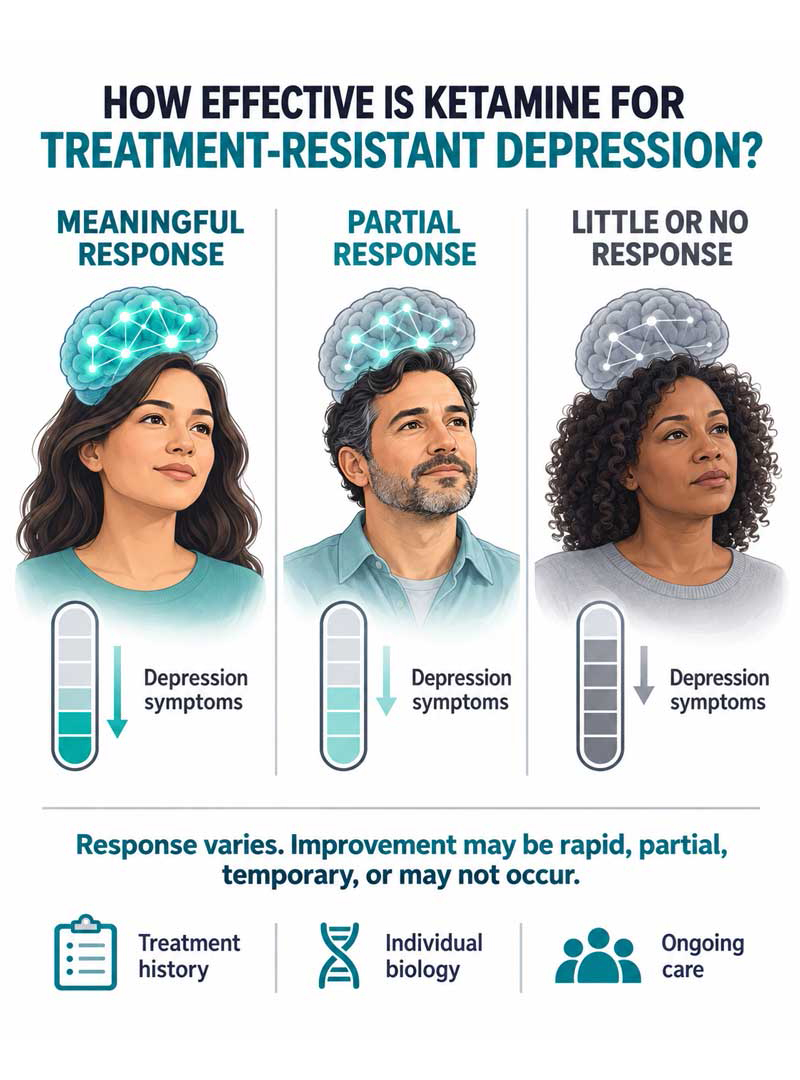
Clinical studies and reviews support rapid antidepressant effects for a meaningful portion of adults with treatment-resistant depression. Response rates vary across studies because protocols, populations, outcome definitions and follow-up periods differ. A 2024 peer-reviewed review of ketamine for treatment-resistant depression summarizes the developing evidence and clinical considerations.
Improvement can include reduced depressive symptoms, greater interest, clearer thinking or fewer suicidal thoughts. A response does not always mean full remission, and early benefit may diminish. Repeated or maintenance treatment is sometimes considered, but long-term strategies should be reviewed carefully.
Ketamine should not be described as a guaranteed treatment, permanent cure or replacement for all other care. A useful evaluation asks not only whether a symptom score changed, but whether the person is safer and functioning better.
Side Effects and Risks
The treatment experience is usually time-limited, but ketamine can cause important physical and psychological effects. Risks depend on dose, route, health history, concurrent substances and treatment setting.
Short-Term Effects
Dissociation, altered perception, dizziness, drowsiness, nausea, headache, anxiety, increased blood pressure and increased heart rate can occur.
Medical Concerns
Uncontrolled cardiovascular disease and other conditions may increase risk. Screening and monitoring should be matched to the patient and route.
Longer-Term Uncertainty
Evidence about extended maintenance treatment is less developed than evidence about short-term response. Urinary, cognitive and misuse-related harms require attention.
Misuse Potential
Ketamine has abuse and dependence potential. A history of substance-use problems calls for careful assessment, controlled access and follow-up.
Psychiatric Screening
Possible bipolar disorder, psychosis, severe agitation and other psychiatric factors should be reviewed before treatment.
Response Monitoring
Clinicians should measure symptoms, functioning, adverse effects and duration of benefit—not continue treatment automatically.
What About At-Home Ketamine?
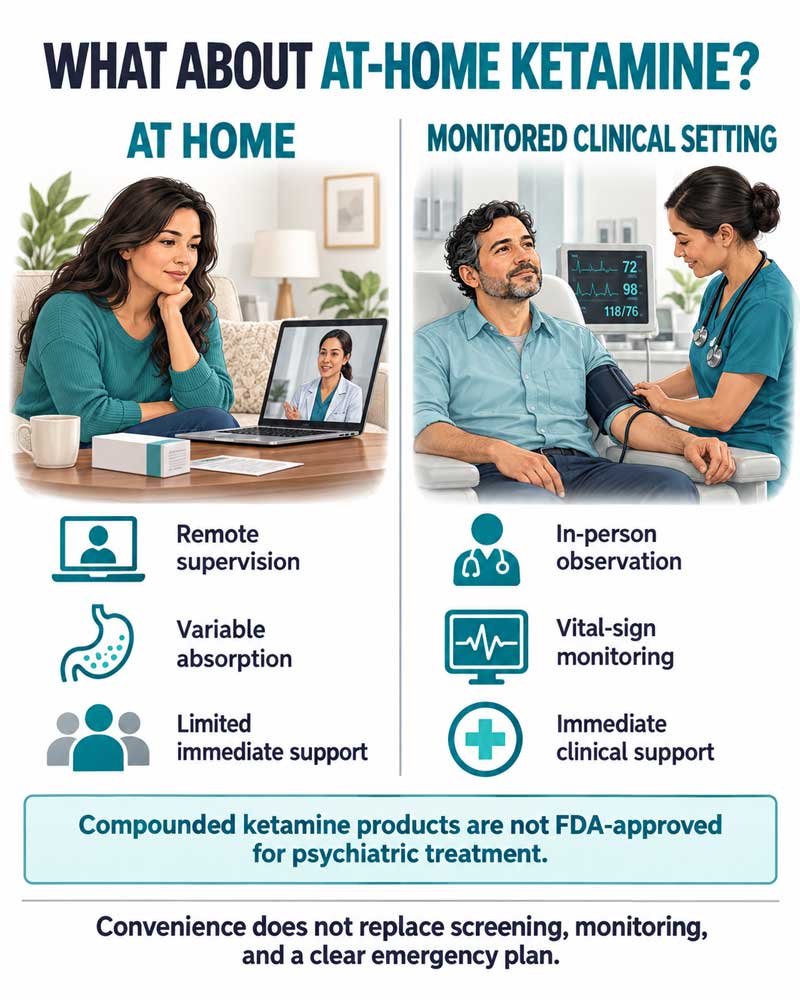
At-home programs often use compounded oral or sublingual ketamine. These products are not FDA-approved for psychiatric treatment, and compounded medications do not undergo FDA premarket review for safety, effectiveness or quality. The FDA has warned about risks associated with compounded ketamine products, including products used at home.
Home use also changes the treatment environment. Immediate vital-sign monitoring, direct observation and rapid clinical intervention may be more limited than in an appropriately staffed medical setting. Absorption can be less predictable than with IV administration.
Before considering any remote program, ask who prescribes the medication, how identity and diagnosis are verified, what medical screening occurs, whether dosing is directly observed, how emergencies are handled, how controlled substances are stored and what follow-up is provided.

Cost and Insurance Coverage
Coverage for IV ketamine is often limited because its use for depression is off-label. Some plans may cover parts of the evaluation, monitoring or related medical services without covering the medication or infusion itself. Policies differ substantially.
SPRAVATO® may follow a different coverage pathway because it has FDA-approved depression indications, but prior authorization, clinical criteria, network rules and cost sharing may still apply.
Instead of relying on a single advertised price, ask for the total expected cost of evaluation, medication, administration, monitoring, follow-up, maintenance visits and missed-appointment policies. Request procedure and diagnosis codes when verifying benefits.
How to Evaluate a Ketamine Provider
The quality of assessment, monitoring and follow-up matters as much as the medication itself.
Clinical Assessment
Who confirms the diagnosis? How are bipolar disorder, psychosis, substance use, medical conditions and prior treatment reviewed?
Medical Oversight
Who is present during dosing? What credentials do they hold, what vital signs are monitored and what emergency equipment is available?
Informed Consent
Does the provider clearly explain off-label status, realistic outcomes, alternatives, side effects, uncertainties and reasons to stop?
Outcome Tracking
How are depressive symptoms, suicidal thoughts, functioning, side effects and duration of benefit measured over time?
Continuity of Care
Will the clinic coordinate with a psychiatrist, therapist or primary care clinician? What support is available between visits?
Transparent Costs
What is included in the quoted price? How are insurance, cancellations, nonresponse and maintenance treatment handled?

Ketamine-Assisted Psychotherapy
Ketamine-assisted psychotherapy combines ketamine administration with structured psychotherapeutic support before, during or after dosing. Programs differ in therapist involvement, treatment setting and therapeutic method.
Psychotherapy may help patients prepare for the experience, understand emotions or insights and connect treatment with practical behavioral goals. However, ketamine-assisted psychotherapy is not one standardized protocol, and the evidence base is not identical to the evidence for ketamine’s medication effects.
Patients should ask whether the therapist is licensed, how responsibilities are divided between the prescriber and therapist, what happens during dosing, how adverse reactions are managed and whether psychotherapy fees are separate.
Frequently Asked Questions About Ketamine Treatment
Clear answers to common questions about ketamine treatment for depression, treatment-resistant depression, safety, cost and access.
Is ketamine treatment for depression FDA-approved?
IV racemic ketamine is not FDA-approved specifically for depression; psychiatric use is off-label. SPRAVATO® contains esketamine and has FDA-approved depression indications with product-specific administration and monitoring requirements.
How fast does ketamine work for depression?
Some patients notice improvement within hours or days. Others need several treatments to evaluate response, improve only partially or do not respond. A rapid timeline is possible, not guaranteed.
How long does a ketamine infusion take?
Many psychiatric IV protocols administer medication over approximately 40 minutes, but the complete visit is longer because it includes preparation, monitoring and recovery. Protocols vary.
How many ketamine treatments are needed?
Many clinics use an initial series followed by reassessment. The number and frequency should depend on response, side effects, duration of benefit and clinical need rather than an automatic package.
How long do the effects last?
Duration varies. Improvement may fade after days or weeks, while some patients maintain benefits longer. Maintenance treatment is sometimes considered alongside broader ongoing depression care.
What are the side effects of ketamine treatment for depression?
Possible short-term effects include dissociation, altered perception, dizziness, drowsiness, nausea, headache, anxiety and temporary increases in blood pressure or heart rate. Longer-term and frequent-use concerns include misuse, urinary symptoms and possible cognitive effects.
Can ketamine make depression worse?
Some people experience distress, anxiety, mood instability or no benefit. Any worsening depression, agitation, emerging manic symptoms or suicidal thinking should be reported immediately and assessed promptly.
Can ketamine treat depression and anxiety at the same time?
Anxiety symptoms may change when depression improves, but ketamine should not be assumed to treat every anxiety disorder. Diagnosis, evidence, risks and treatment goals should be evaluated separately.
Is ketamine used for bipolar depression?
Ketamine has been studied in bipolar depression, but care requires specialist assessment because bipolar disorder has different treatment considerations, including mood switching and the role of mood-stabilizing medication.
Is at-home ketamine the same as an IV infusion?
No. At-home programs often use compounded oral or sublingual medication. Absorption, dosing precision, evidence and monitoring differ from IV administration, and compounded products are not FDA-approved for psychiatric treatment.
Can I drive after ketamine treatment?
Patients are generally instructed not to drive after treatment and to arrange transportation home. Follow the treating clinic’s specific restrictions regarding driving, machinery, alcohol and important decisions.
Does insurance cover IV ketamine?
Coverage is often limited because IV ketamine is used off-label for depression. Benefits vary by plan. SPRAVATO® may have a different coverage pathway because it has FDA-approved depression indications.
Is ketamine addictive?
Ketamine has misuse and dependence potential. Risk assessment is especially important for people with a history of substance-use problems. Medical supervision and controlled access reduce but do not eliminate risk.
Is ketamine a cure for depression?
No. Ketamine can reduce symptoms for some people, but it is not considered a permanent cure. Ongoing medication, psychotherapy, maintenance treatment or other support may still be needed.
The Bottom Line
Ketamine has changed how researchers and clinicians think about the speed of antidepressant treatment. For some people with treatment-resistant depression, medically supervised IV ketamine can produce meaningful improvement after other approaches have not been sufficient.
It remains a serious medical treatment with important uncertainties. Ketamine for depression is off-label, response varies, maintenance evidence continues to evolve, and the medication carries physical and psychological risks. Careful screening, monitoring and coordination with ongoing mental healthcare are essential.
The goal is not to choose the newest or fastest treatment. It is to identify a safe, evidence-informed plan that fits the person’s diagnosis, history, needs and measurable treatment goals.
Authority Sources and References
These noncommercial and peer-reviewed sources support the medical and regulatory information on this page.
Need Immediate Help?
If you or someone else is in immediate danger, call 911. For crisis support anywhere in the United States, call or text 988.