

Depression Treatment Options and Trusted Resources
Clear, evidence-based information about therapy, medication, TMS, ECT, ketamine, SPRAVATO® and other approaches to depression treatment.
What is the best treatment for depression?
There is no single treatment that works best for everyone. Psychotherapy and antidepressant medication are common starting points. For persistent, severe or treatment-resistant depression, clinicians may also consider TMS, ECT, SPRAVATO®, ketamine or a higher level of care after an individualized evaluation.
Depression Treatment Begins With the Right Evaluation
Depression can affect mood, sleep, energy, concentration, relationships, work and the ability to feel pleasure or hope. It can also appear differently from one person to another.
A thoughtful evaluation looks beyond a symptom checklist. It considers the type and severity of depression, previous treatment results, physical health, medications, substance use, sleep, trauma, possible bipolar disorder and immediate safety concerns.
The National Institute of Mental Health identifies psychotherapy, medication and brain stimulation as established approaches to depression care. Many people receive more than one treatment, either together or at different stages of recovery.
Explore Approaches to Depression Treatment
Each option will have a dedicated guide covering how it works, who may be eligible, potential benefits, limitations, risks and questions to ask a provider.
Psychotherapy
Structured treatment can help people understand patterns in thoughts, emotions, behavior and relationships while building practical coping skills.
Explore psychotherapy →Antidepressant Medication
Medication may be used alone or with therapy. Finding the right medication can require adjustments based on response and side effects.
Explore medications →TMS
Transcranial magnetic stimulation uses noninvasive magnetic pulses and is often considered when antidepressants have not provided adequate relief.
Explore TMS →ECT
Electroconvulsive therapy may be considered for severe, urgent, psychotic, catatonic or difficult-to-treat depression.
Explore ECT →Ketamine
Ketamine is used off-label in selected clinical settings for depression, particularly when previous treatments have not provided adequate relief.
Explore ketamine →SPRAVATO®
SPRAVATO® is FDA-approved esketamine nasal spray administered under supervision in a certified healthcare setting for specific indications.
Explore SPRAVATO® →Depression Treatments at a Glance
This overview can help organize a conversation with a clinician. It does not determine which treatment is appropriate for an individual.
| Treatment | What it involves | When it may be considered |
|---|---|---|
| Psychotherapy | Structured treatment with a licensed mental health professional | Mild, moderate or severe depression; often combined with other care |
| Medication | Prescription treatment affecting brain signaling involved in mood | Moderate or severe symptoms, recurrent episodes or persistent depression |
| TMS | Noninvasive magnetic stimulation of targeted brain areas | Often after medication has not provided adequate relief |
| ECT | Controlled electrical stimulation performed under anesthesia | Severe, urgent, psychotic, catatonic or difficult-to-treat depression |
| SPRAVATO® | FDA-approved esketamine nasal spray in a certified treatment setting | Eligible adults with treatment-resistant depression and certain other indications |
| IV ketamine | Medically administered ketamine used off-label for depression | Selected patients with difficult-to-treat depression |
| Light therapy | Regular exposure to a controlled therapeutic light source | Most commonly associated with seasonal depression |
How a Depression Treatment Plan Takes Shape
Treatment decisions are usually made through a sequence of evaluation, discussion, monitoring and adjustment.
Clarify the diagnosis
Review symptoms, duration, health history and whether another condition could be contributing.
Review past care
Document previous therapy, medication doses, treatment duration, benefits and side effects.
Compare appropriate options
Discuss expected benefits, risks, costs, time commitments and alternatives.
Measure and adjust
Track symptoms and daily functioning, then refine the plan based on response.
Understanding Ketamine and SPRAVATO®
Ketamine and esketamine are related, but they are not interchangeable. They differ in medication, administration, regulatory status, treatment setting and potential insurance coverage.
Compare Ketamine and SPRAVATO®IV Ketamine
Medically administered ketamine used off-label for depression after individual screening.
Learn about ketamine →SPRAVATO®
FDA-approved esketamine nasal spray with required administration and monitoring safeguards.
Learn about SPRAVATO® →Find Depression Treatment Resources by Location
Explore state and local guides covering treatment options, provider questions, access considerations and relevant public resources. Coverage will expand as new guides are published.
Northeast
South
Midwest
Start With Authoritative Depression Information
These public and nonprofit resources offer reliable starting points for understanding depression, medication safety, treatment programs and crisis support.
Depression Overview
Symptoms, diagnosis, treatment and current research from NIMH.
Visit NIMH →Medication Information
Official drug approvals, prescribing information and safety communications.
Visit FDA →Find Treatment
A national directory for locating mental health and substance-use services.
Visit FindTreatment.gov →Questions About Depression Treatment
What is major depressive disorder?
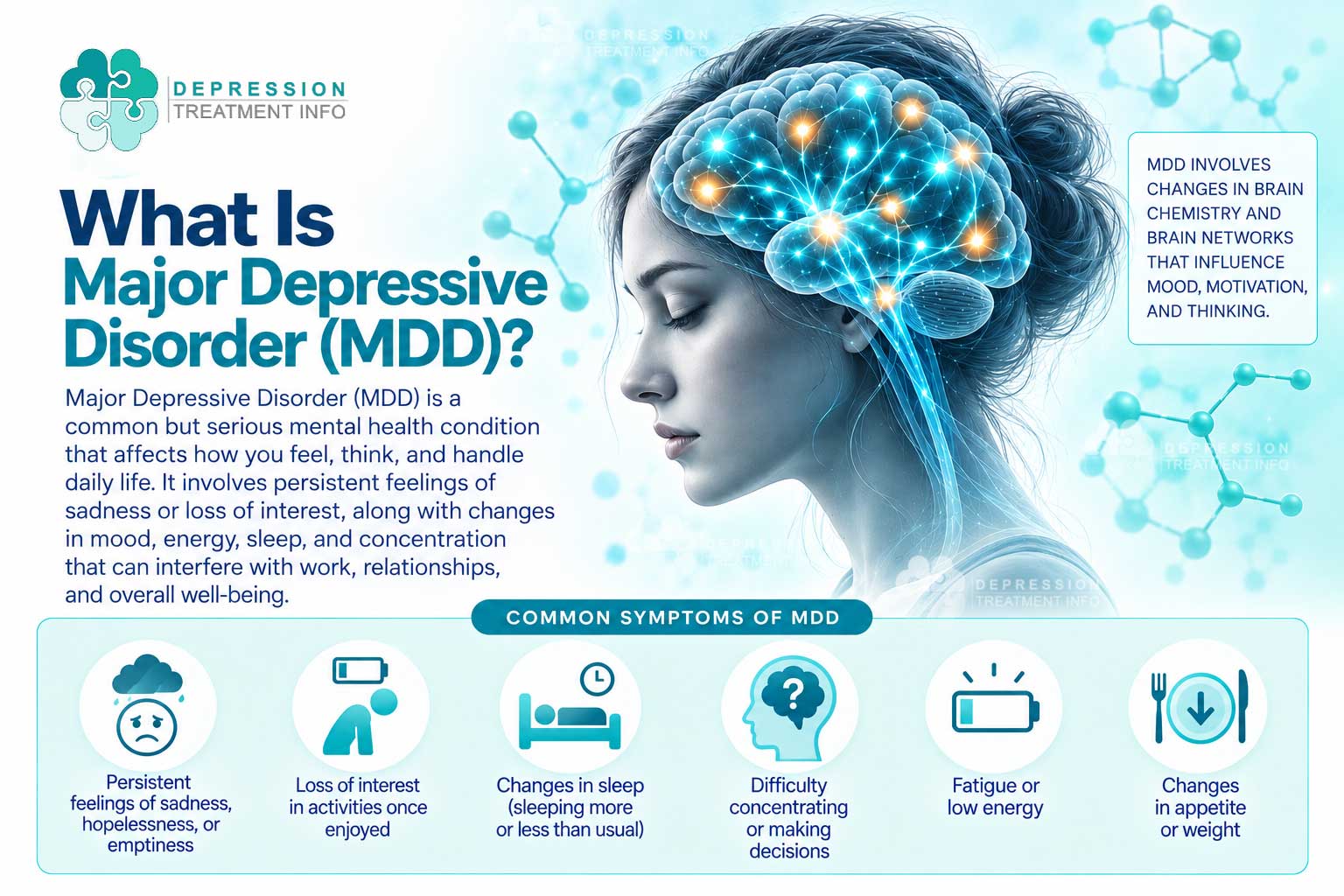
Major depressive disorder, also called major depression or clinical depression, is a mood disorder involving persistent symptoms that cause distress or interfere with daily life. The National Institute of Mental Health explains that major depression includes depressed mood, loss of interest or both most of the time for at least two weeks.
What are the most common symptoms of MDD?
Possible MDD symptoms include persistent sadness or emptiness, loss of interest or pleasure, fatigue, sleep or appetite changes, difficulty concentrating, feelings of guilt or worthlessness, physical slowing or restlessness, and thoughts of death or suicide. Symptoms vary, and a person does not need to experience every possible symptom.
How is major depressive disorder different from feeling sad?
Sadness is a normal emotion that often changes with time and circumstances. Major depressive disorder involves a broader pattern of symptoms that persists and interferes with functioning. A diagnosis considers symptom duration, severity and impact rather than sadness alone.
How is major depressive disorder diagnosed?
A qualified clinician evaluates symptoms, duration and effects on everyday functioning. The assessment may also review previous episodes, medications, physical health, sleep, substance use and possible bipolar disorder. Medical conditions or medication effects that can resemble depression may need to be considered.
What treatments are used for major depressive disorder?
Treatment may include psychotherapy, antidepressant medication or both. Depending on severity, urgency and previous response, a clinician may also consider TMS, ECT, SPRAVATO®, ketamine or a more intensive level of care. The appropriate plan depends on the person’s diagnosis, health, preferences and treatment history.
What is treatment-resistant depression?
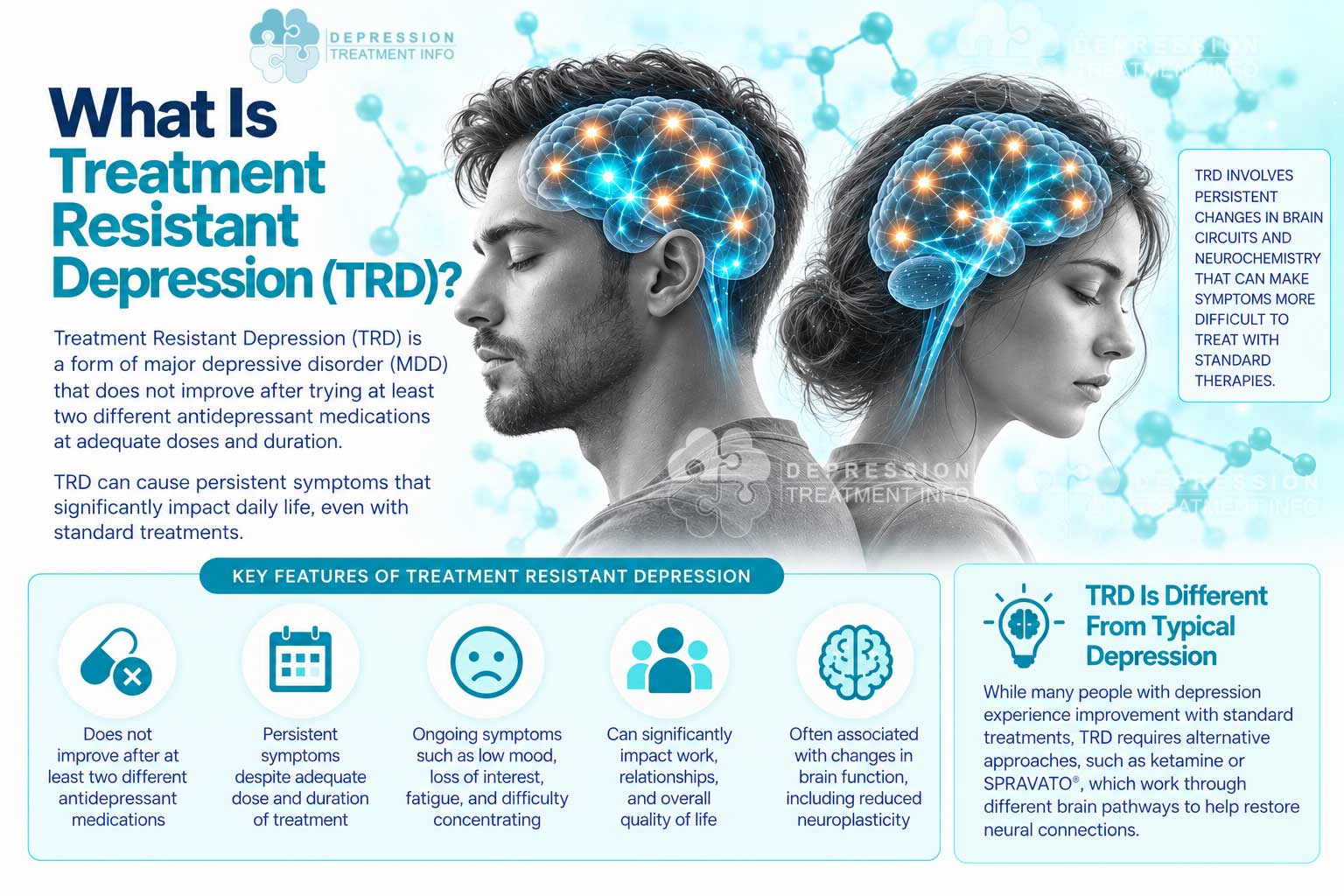
Treatment-resistant depression, often shortened to TRD, describes depression that has not improved adequately after appropriate treatment attempts. Definitions vary, but the term commonly refers to insufficient response after at least two antidepressant trials of adequate dose and duration.
Does treatment-resistant depression mean nothing will work?
No. TRD does not mean that recovery is impossible. It signals that the diagnosis, previous treatment doses and durations, adherence, side effects, coexisting conditions and remaining options should be reviewed carefully. Information from earlier treatment attempts can help guide the next decision.
What treatment options remain when antidepressants do not help?
Possible next steps include switching antidepressants, combining medications, adding another medication, changing psychotherapy, addressing a contributing condition, or considering TMS, ECT, SPRAVATO® or ketamine. The NIMH depression resource describes medication, psychotherapy and brain stimulation within the broader treatment landscape.
Can ketamine or SPRAVATO® be considered for treatment-resistant depression?
They may be considered for selected adults after an individualized evaluation. Ketamine is used off-label for depression, while SPRAVATO® is FDA-approved for treatment-resistant depression in adults. Eligibility, medical risks, prior treatment and the monitoring requirements of the treatment setting all matter.
What is the difference between IV ketamine and SPRAVATO®?
IV ketamine contains racemic ketamine and is administered intravenously off-label for depression. SPRAVATO® contains esketamine, is administered as a nasal spray and has FDA-approved depression indications. Both require clinical screening, but their dosing, administration, regulatory status and potential insurance coverage differ. See the current FDA prescribing information for SPRAVATO®.
How long does depression treatment take?
The timeline depends on the treatment and the individual. Psychotherapy generally involves multiple sessions, conventional antidepressants may require several weeks to evaluate, and TMS is delivered as a treatment course. Some people notice earlier changes with ketamine, SPRAVATO® or ECT, but no option is guaranteed to work immediately.
Does insurance cover depression treatment?
Coverage varies by plan, provider, diagnosis, treatment type, medical-necessity criteria, deductibles and prior authorization. Psychotherapy and conventional medication may be covered differently from TMS, SPRAVATO®, ketamine, ECT and intensive programs. Benefits should be confirmed directly with the insurer and treating provider.
DepressionTreatment.info provides educational information and does not diagnose medical conditions, recommend treatment for individual readers or replace care from a qualified healthcare professional. Treatment availability, indications and insurance coverage can change. Always confirm current information with an appropriate clinician and official source.